

Updated
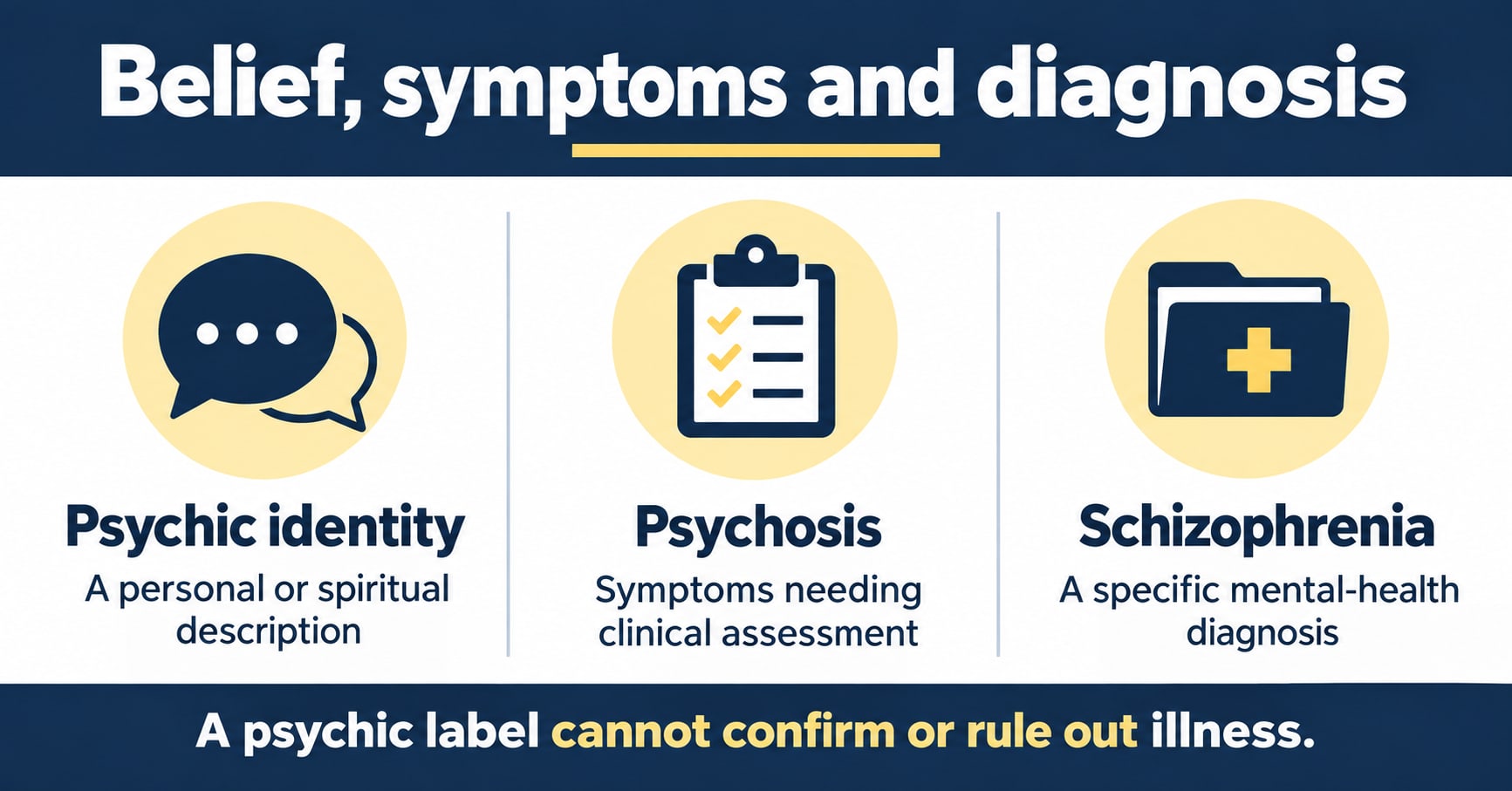
A psychic identity cannot confirm or rule out a mental-health condition. Psychosis describes a collection of symptoms; schizophrenia is a particular diagnosis that can include psychosis. An unusual experience needs context and, when concerning, a qualified clinical assessment. A prediction, reading or spiritual label is not a diagnostic test.
Keep these three questions separate
- Psychic identity: a personal or spiritual description
- A person may use this language to describe beliefs or experiences. It does not establish their mental-health status, and it does not make them immune to illness.
- Psychosis: symptoms needing clinical assessment
- Psychosis can involve hallucinations, delusions or disrupted thinking and perception. It can occur in different conditions and does not automatically mean schizophrenia.
- Schizophrenia: a specific mental-health diagnosis
- A clinician assesses a pattern of symptoms and their impact over time. The diagnosis cannot be made from someone’s appearance, occupation or one conversation.
These distinctions are summarized in the featured infographic. The National Institute of Mental Health (NIMH) guide to psychosis explains that symptoms can have several causes, including mental-health conditions, sleep deprivation, some medicines and substance use. Assessment matters because the appropriate response depends on the individual situation.
What might prompt a conversation with a clinician?
NIMH describes changes such as difficulty telling what is real, hearing or seeing things others do not, confused thinking, disrupted sleep, withdrawal and problems managing ordinary activities. A change from your usual experience, particularly when it persists, intensifies or causes distress, is a reason to seek advice.
This is not a checklist for diagnosing yourself or a client. Not every unusual belief or difficult day has the same explanation. Describe the experience in ordinary terms: when it started, how often it happens, whether it affects sleep or work, and what makes it troubling. You can also explain your cultural or spiritual understanding without treating that explanation as a substitute for assessment.
If you feel unable to stay safe, are becoming severely confused, or an experience is urging you to harm yourself or someone else, seek urgent help. You do not have to determine the exact diagnosis first.
Schizophrenia is not a character judgment
The NIMH schizophrenia overview describes psychotic, negative and cognitive symptom categories. These can affect perception, motivation, concentration and daily functioning. Symptoms differ between people; describing someone as having an uncontrolled ego is neither a clinical explanation nor respectful language.
NIMH emphasizes that most people with schizophrenia are not violent. A person may study, work, have relationships and pursue personal goals with appropriate treatment and support. Their diagnosis does not erase their individuality, and you cannot reliably identify it from a person’s manner or appearance.
Being able to question an experience is not proof that illness is absent. Equally, someone reporting an unusual experience should not be dismissed or labelled from a distance. A proper assessment considers more than either observation.
Why a successful reading cannot settle the question
A client recognizing a name, a prediction seeming accurate or an experience feeling meaningful does not perform a mental-health assessment. Those observations cannot establish immunity from psychosis or schizophrenia. Neither can a reader’s confidence, popularity or professional reputation.
A practitioner should not promise to identify whether a voice is a spirit, certify that a client is free from illness or recommend ending prescribed treatment. Such claims can delay care and create false reassurance. Health questions belong with a professional qualified to assess them.
Seek care that includes your goals and choices
NIMH reports that early treatment for psychosis can improve recovery. Care may include medication, psychotherapy, support for family members, and help with education or employment. Coordinated specialty care brings several forms of support together, with the person involved in decisions.
Ask a primary care provider or mental-health professional about assessment and local early-psychosis services. Bring information about sleep, medicines, substances and changes in daily life. If a treatment is difficult to access or causes side effects, discuss that with the care team; do not change prescribed medication on advice from a reading.
If a client is in immediate distress
Pause the reading and help the person connect with appropriate support. Do not turn a crisis into a paid series of spiritual sessions or a test of their abilities. Follow applicable workplace procedures and seek emergency assistance when there is immediate danger.
In the United States, call or text the 988 Suicide & Crisis Lifeline for a suicidal or mental-health crisis. Call 911 for an immediate life-threatening emergency. Elsewhere, use your local crisis service or emergency number. A person’s safety and access to care take priority over interpreting an experience.
The article highlights the nuanced differences between being a psychic or medium and suffering from schizophrenia. It’s important to approach such discussions with both scientific rigor and empathy towards those who experience these conditions.
This piece does a good job of clarifying misconceptions about psychics and schizophrenics. The explanation about the role of ego in both conditions is thought-provoking and provides a new perspective on these mental health issues.
The distinction between psychosis and schizophrenia is elucidated quite well in this article. It’s important for the general public to understand these differences. The detailed description of the symptoms associated with different types of schizophrenia is particularly useful.
This article provides a comprehensive overview of the differences between psychosis, schizophrenia, and psychic abilities. Understanding that hearing voices is just one of many symptoms associated with schizophrenia is crucial for better mental health awareness.
I appreciate the in-depth analysis of schizophrenia symptoms and how they differ from common psychic experiences. The section on how mediums can bring forth verifiable information was particularly intriguing.