

Reading tools · Symbolism · Choosing a format
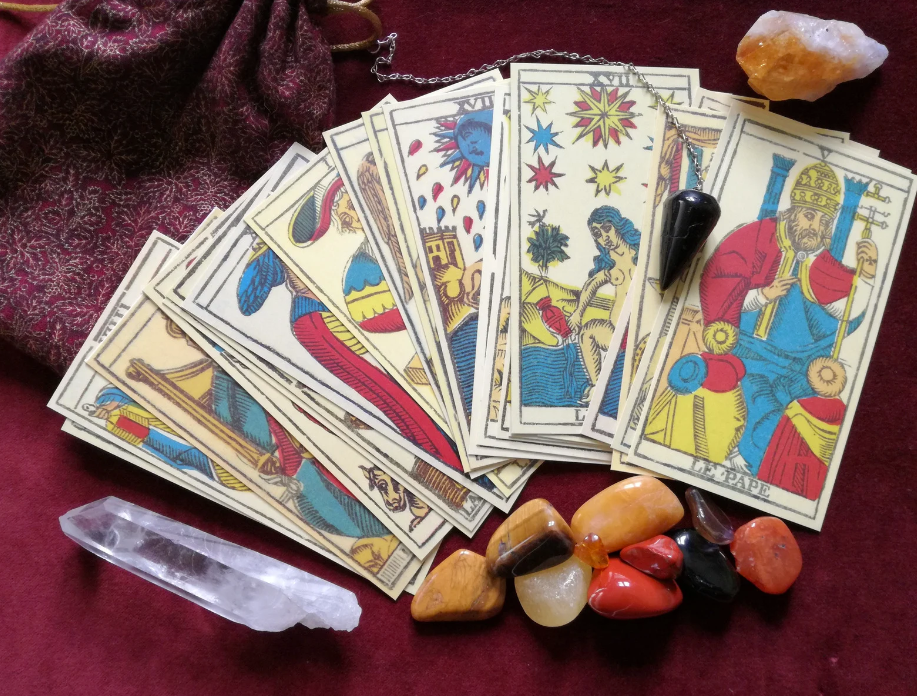
A “tool reader” generally means a practitioner who uses objects or symbolic systems—such as tarot cards or tea leaves—to structure a reading. Some use one method; others combine several. A tool can prompt a conversation, but its presence does not make an interpretation a verified fact or a reliable prediction.
Readers and methods differ
Ask a reader how they use their chosen method. Do they follow a deck’s guidebook, draw on a particular tradition, offer intuitive impressions or combine these approaches? Knowing the format helps you understand what you are being offered.
Two readers may interpret the same symbol differently. That is a reason to distinguish the symbol from the reader’s explanation—not proof that one of them has accessed a hidden truth. You can find an interpretation interesting without agreeing with it.
Choosing tarot, oracle or angel cards
If you want a deck for personal reflection, consider whether you can read the text, see the artwork comfortably and understand the accompanying guide. Decide on a budget before purchasing. You do not need an expensive or “energetically matched” deck to ask thoughtful questions.
Card systems and guidebooks can differ, so avoid assuming every card has one universal meaning. A reader’s familiarity with a deck is different from evidence that it predicts events. Handling the cards or feeling strongly about them does not establish greater accuracy.
For a simple exercise, choose one image and ask, “What does this bring to mind?” Then separate the idea it suggests from anything you can actually verify. Do not keep drawing cards until one gives the answer you want.
Crystal balls and scrying
Crystal-ball reading is commonly associated with scrying: looking at a surface and interpreting impressions or images. Movie scenes in which a ball clouds over and reveals events should not be treated as demonstrations of how a real reading works.
Ask the reader to explain what they mean by an image appearing. An imagined association does not prove that the object contains information about another person or the future. You need not buy a crystal ball or strain your eyes to explore symbolism.
Tea-leaf readings
Tea-leaf reading involves interpreting shapes made by leaves remaining in a cup. Methods and interpretations vary. It is better to ask about a specific practice than to describe every version as one ancient tradition belonging to a single culture.
If you explore it as a creative activity, use ordinary food-safe tea and allow the cup to cool before handling or moving it. Look at a shape, describe what it resembles and write down the association as your own interpretation. A pattern is not proof of a message or prediction.
You can also explore shapes in a drawing without making tea. There is no need to consume unfamiliar substances, acquire special equipment or believe that stronger “energy” makes the reading more truthful.
Other formats you may encounter
- Bone readings: Practices can have specific cultural or spiritual contexts. Ask about the particular tradition and materials rather than treating them as interchangeable props.
- A reading without objects: A practitioner may describe impressions directly. Not using a tool does not establish greater accuracy.
- Angel cards: Interpretations use angel-related spiritual imagery; a card does not verify contact with an angel.
- Oracle cards: The deck’s own design and guide may shape the reading. Check which system is being used.
- Palm reading: Traditional interpretations of hand markings are not a verified assessment of health, ability or destiny.
- Tea-leaf reading: Shape interpretation may support storytelling or reflection without establishing future events.
- Numerology: Number symbolism should not be treated as a qualification test or a command about a life decision.
- Astrology: A symbolic chart interpretation does not prove what another person thinks or what will happen to you.
- Dream interpretation: A suggested meaning is not a diagnosis, recovered memory or guaranteed prediction.
There is no need to rank cultures or tools by supposed spiritual power. Be specific about the source of an interpretation and respectful when a practice has meaning beyond entertainment.
Before booking a reading
- Confirm the format, duration and total price.
- Ask what the reader claims the method can and cannot tell you.
- Decide which subjects are off-limits and how much personal information to share.
- Check cancellation terms and whether you may pause or end a session.
- Keep the right to disagree without being blamed for poor results.
You do not have to be completely relaxed, impressed or open to every suggestion. There is no universal requirement to wait three months between readings; equally, you do not need to book another session at all. Set your own time and spending limits, and pause if repeated readings leave you more anxious or dependent.
A useful interpretation leaves you choices
Illustrative example: An oracle card about “new beginnings” prompts you to think about a neglected hobby. You decide to spend an hour sketching at home. The card provided a question, not evidence that you must quit your job or make a major purchase.
Do not treat a reader’s tool as a source of medical diagnosis, financial certainty or permission to override someone’s consent. Be wary of statements such as “You cannot handle the truth” when you question an interpretation, or demands for extra payments to remove a curse or prevent disaster.
The explanation of tea leaf and crystal ball readings provides a useful historical context. It’s fascinating to see how different cultures have developed their own methods for divination.
The article highlights the diversity of divination practices well. It’s informative to learn about the various tools from tarot cards to numerology and how they differ in approach and interpretation.
A well-rounded overview of different fortune-telling methods. The point about each reading being unique and influenced by the reader’s interpretation and the seeker’s energy is particularly interesting.
Interesting exploration of the different forms of readings and tools used in divination. The emphasis on the uniqueness of each reader and reading adds a personalized dimension to the topic.
The article comprehensively explains the variety of divination tools and practices that have been used across cultures. It sheds light on the importance of energy and personal connection when interpreting these tools, which is an intriguing notion.