

Psychic fairs · Culture, commerce and visitor planning
Mystical markets: a grounded guide to psychic fairs
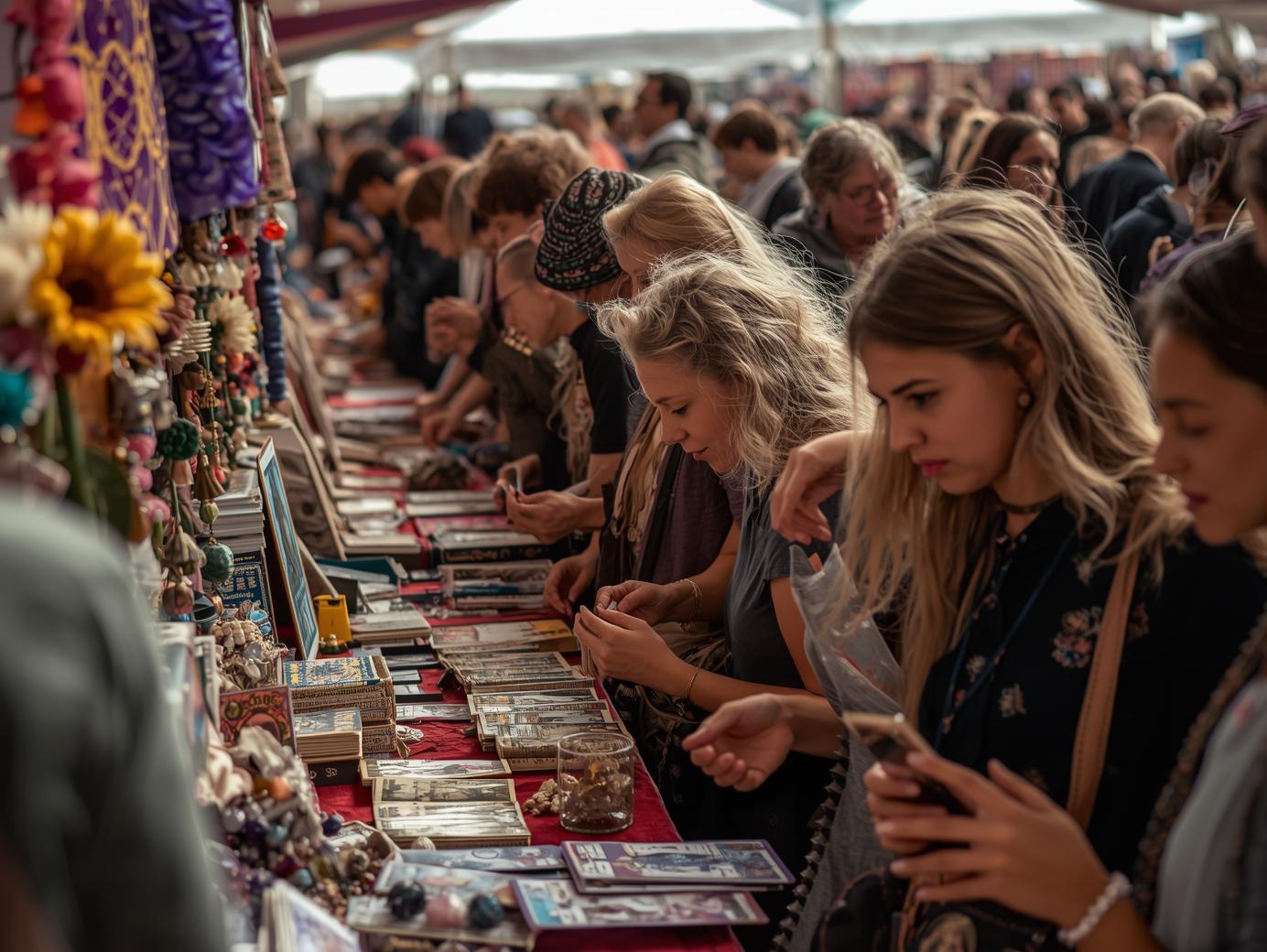
A convention hall of tarot tables, books, crystals and workshop stages can be a lively place to explore spiritual interests. It is also a marketplace: people are selling time, products and experiences. Understanding both sides helps visitors stay curious while making informed choices.
Event size, attendance and programs vary, and promotional claims are not a substitute for comparable records. A large crowd does not establish psychic accuracy. Use the examples below to explore different formats and plan a visit, not as a global size ranking.
What a psychic fair brings together
“Psychic fair,” “metaphysical expo” and “mind-body-spirit festival” are overlapping descriptions, not identical event formats. A small community fair might focus on short readings and local vendors. A broader wellbeing festival may combine shopping, talks and activities that are not specifically psychic.
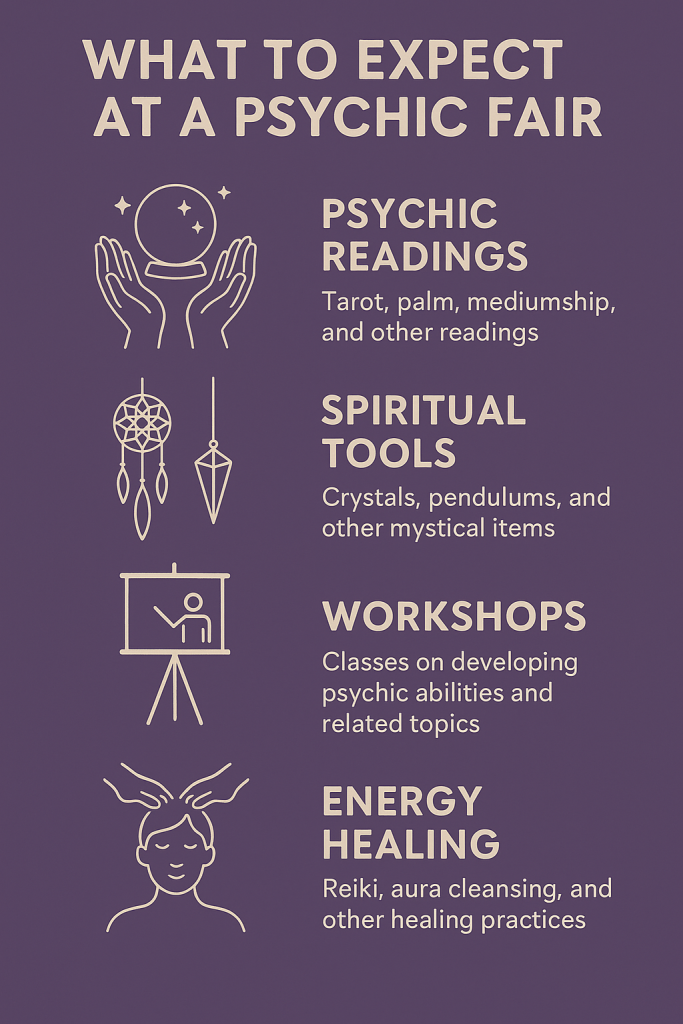
- Reading booths: services advertised as tarot, astrology, palmistry, mediumship or intuitive readings.
- Talks and demonstrations: presentations explaining a practice or performing it before an audience.
- Retail stalls: books, artwork, jewelry and objects used in spiritual practices.
- Participatory sessions: workshops or activities with their own booking, cost and access arrangements.
These are possibilities to check in the program, not a promise that every fair includes them. A busy hall can show an active community and commercial interest. It does not demonstrate that a reading is accurate or that an advertised treatment works.
Event examples with organizer sources
Body Mind Spirit Celebration and the Cincinnati connection
Body Mind Spirit Celebration’s organizer information describes a US event network that incorporates Ohio’s Victory of Light and Colorado’s Celebration Metaphysical Fairs. Event names can change; check which organizer runs the edition you are considering.
The Cincinnati Spring 2024 program documents exhibitors and stage presentations at Sharonville Convention Center. It illustrates how a program can help visitors compare topics and plan their day. Its dates and prices belong to that edition, not to a current booking.
For a future visit, start from the organizer’s current city listing. Do not assume the same readers, venue, number of booths or ticket terms will carry forward.
Mind Body Spirit Festival, London
The London organizer’s ticket information describes festival entry, a wellbeing market and stages for its 2026 Olympia edition. Its advertised May dates are already past. Check the next edition directly rather than using an archived price or schedule.
This example also shows why visitors should distinguish general admission from specific workshop arrangements. A festival ticket should not be assumed to include every private reading, reserved session or extra activity.
MindBodySpirit Festival, Australia
The Australian MindBodySpirit Festival organizer lists events in Sydney, Melbourne and Brisbane. Consult the city-specific information for the relevant edition and venue. Check the named organizer rather than relying on a generic expo label or a promotional size claim.
A broader wellness festival is not necessarily comparable to a dedicated psychic fair. Check how much of the actual program matches your interests before deciding whether travel is worthwhile.
What this selection does not establish
These examples are not an exhaustive worldwide directory or a ranking. Before planning travel to any fair, find its identifiable organizer and current listing. A familiar name or an old description is not enough to confirm the next edition.
How to document an event responsibly
If you are researching fairs, begin with the exact event name, organizer, venue, edition and date. Save the relevant program and note when you checked it. Separate statements made by organizers from your own observations.
A claim of “hundreds of exhibitors” is not the same as hundreds of psychic readers. A weekend attendance total may count repeat visits differently from a unique-visitor figure. A projection in a media pack is not necessarily a measured outcome. Without comparable definitions, a largest-event league table can mislead.
- Describe what was actually offered rather than repeating promotional promises.
- Attribute attendance or size figures to their source and explain their limits.
- Distinguish an interview, a testimonial and independently checked information.
- Do not report a spiritual interpretation as an observed physical fact.
- Ask permission before recording or publishing identifiable personal stories.
Illustrative example: At home, you compare two event programs on your kitchen table. One lists a large vendor market; the other has fewer booths but several talks that interest you. You choose by topic, travel cost and access needs—not by assuming a bigger crowd means more reliable readings.
The community value—and its limits
For some visitors, the appeal is social: meeting people with similar interests, discussing books or returning to familiar stalls. Others attend with skepticism or simply enjoy browsing. Neither response needs to be treated as a problem.
Shared enthusiasm can make a practice feel familiar and welcoming, but agreement in a crowd is not an independent test of a claim. Tears during a mediumship demonstration may show that the moment is emotional; they do not, by themselves, establish communication with a deceased person.
Allow people to describe their own experiences without pressuring them to convert, disclose grief or endorse a practitioner. A respectful event experience leaves room for belief, doubt and the choice not to participate.
Behind the scenes: practical questions, not assumed guarantees
Venue choice, booth layout, scheduling and exhibitor administration all affect a fair. Visitors should not assume that the organizer has verified every reader’s abilities or that every booth offers privacy. A curtain or table divider may separate spaces visually without preventing nearby conversations from being heard.
Ask how the event handles noise, queues, complaints, photography and conduct. Check whether a workshop requires a separate reservation. If you need an accommodation, describe the practical requirement rather than relying on a broad “accessible venue” statement.
A market ecosystem is a useful metaphor for connected roles: organizers provide the setting, exhibitors offer services, and visitors decide where to spend attention and money. It should not be presented as a scientific model of psychic energy or a guarantee that every participant benefits.
Ethics, commerce and cultural respect
Charging for a reading is a transaction with terms that should be clear. Before agreeing, ask about the price, duration, method and what happens if either party ends the session. Low cost alone does not establish good ethics, and a prominent stage slot does not establish accuracy.
Step back from pressure involving curses, threats, guaranteed outcomes or urgent demands for further paid work. A spiritual service should not replace relevant medical, legal, financial or mental health advice. An organizer’s acceptance of an exhibitor is not itself a professional credential.
When a practice is described as belonging to a particular cultural or religious tradition, ask who is presenting it and how they describe their relationship to that tradition. Avoid treating different Indigenous communities as interchangeable or assuming that a generic “Native-inspired” label establishes authority. Respect restrictions on participation, photography and sharing that practitioners explain.
Questions and criticism can be expressed politely. You do not need to stage a confrontation to decline a reading, and a reader should not frame reasonable questions as a visitor’s spiritual failure.
Before you go: a practical checklist
- Verify the event. Check the organizer, date, venue and cancellation information. Make sure a search result is not for a past edition.
- Choose your purpose. Browsing, attending a talk and booking a private session may involve different costs and expectations.
- Set a total limit. Include transport, accommodation, entry, workshops, readings, food and purchases. Leave room to attend without buying extras.
- Check payment and booking. Ask which methods individual exhibitors accept; do not assume every stall takes cards or cash.
- Confirm access needs. Ask about step-free routes, seating, toilets, lifts, quiet spaces and sound, lighting or scent conditions.
- Plan your exit. Know how you will get home, where you can rest and whether re-entry is permitted.
You can decide not to attend if the information is unclear or the arrangements do not meet your needs. A feeling that you were “meant to be there” does not require you to ignore practical concerns.
At the fair: take your time
Browse before committing. Read descriptions, compare posted terms and ask a reader to explain their approach. You can decline a topic, refuse recording or end a conversation. Do not disclose sensitive personal information simply because the atmosphere feels friendly.
Choose talks for their stated content, not promises of guaranteed awakening or healing. If a session involves touch or participation, ask what it entails before joining. An impressive demonstration is a performance you can observe, not automatically a controlled test.
Take breaks when you need them. Crowds, sound, scents and emotional conversations can be demanding. A quiet pause or leaving early is a reasonable choice; you do not need to buy a protection object or cleansing session to justify it.
For readers and vendors considering a booth
A fair can be a place to present your work, but attendance is not a promise of clients or profit. Before paying, request the exhibitor terms and calculate costs: booth space, travel, stock, equipment, accommodation and your time. Separate an organizer’s attendance estimate from evidence about the customers likely to visit your particular booth.
Ask about permitted services, setup hours, cancellation terms, power or furniture, photography and the handling of customer concerns. Check any applicable local requirements through appropriate official sources; this article does not establish what licenses, insurance or tax arrangements apply to your business.
Keep offers understandable. State the session length and price, avoid invented testimonials or qualifications, and let visitors decline without pressure. Obtain permission before adding anyone to a mailing list or using their story in promotion.
Afterward: reflection without pressure
Write down what you actually heard, what you inferred and what you want to check. Keep a memorable phrase separate from a factual prediction. Avoid making an important commitment immediately because a reading felt powerful.
You can value an enjoyable conversation or a new friendship without endorsing every claim made at the event. If you have a concern about a transaction, keep the receipt and relevant terms and use the organizer’s or seller’s stated contact process.
Virtual participation can reduce travel when an organizer offers it, but verify what the ticket includes: live access, recordings, private sessions and time zones may differ. Do not assume an in-person event automatically has a remote equivalent.
Frequently asked questions
1. What qualifies as a world’s largest psychic fair?
There is no ranking established by this guide. A defensible comparison would need dated, comparable attendance or exhibitor figures and a clear definition of which events are included. Promotional superlatives alone are insufficient.
2. What can visitors expect?
Depending on the event, the program may include readers, product stalls, talks, demonstrations or workshops. Check the current organizer program; not every activity is available at every edition.
3. How much do readings cost?
Ask the individual reader for the total price, currency, duration and any additional charges before agreeing. Admission and workshop tickets may be separate. This guide does not provide a universal current price range.
4. How can I evaluate a reader on a busy floor?
Ask about the method, limits, duration, price and cancellation terms. Look for willingness to answer questions and accept disagreement. Popularity, a queue or an exhibitor badge does not establish accuracy.
5. Do all large fairs have the same ethical standards?
No common standard is established here. Read the specific organizer’s rules and ask how concerns are handled. Do not assume that admission as an exhibitor certifies supernatural ability or professional qualifications.
6. Which workshops should I choose?
Choose a topic relevant to your interests, then check its description, presenter background, total cost and participation requirements. A demonstration can show a presentation style but does not by itself prove a claimed ability.
7. May I photograph or record a reading?
Ask the organizer about event rules and obtain permission from everyone identifiable in your recording. Respect refusals and no-photo signs. Do not capture private sessions or publish someone’s personal story without permission.
8. What should I bring?
Consider a charged phone, comfortable footwear, a notebook and your chosen payment method. Check the venue’s rules on bags, food and drink, and plan for any personal access or health needs.
9. When will it be quietest?
Crowds depend on the event and schedule. Ask the organizer about quieter sessions or timed entry rather than assuming a particular hour will be calm. Confirm any booking or queue arrangements in advance.
10. Are mobility and sensory accommodations available?
Verify the specific venue and event setup. Ask about step-free routes, seating, toilets, lifts, quiet spaces, sound, lighting and scent policies. Do not assume a large venue provides every accommodation.
11. Can children or skeptical friends attend?
Check age restrictions, supervision rules and session-specific limits first. Friends can attend with different beliefs if the event allows it; participation in readings or demonstrations should remain voluntary.
12. How can I avoid becoming overwhelmed?
Set a time and spending limit, plan breaks and leave if needed. Noise, crowds and emotional conversations can be tiring. You do not need a protective crystal or a paid cleansing session to justify taking a break.
13. How should I budget for travel?
Add transport, accommodation, entry, separately priced sessions, food and purchases. Verify dates and cancellation terms before booking. Do not assume an old ticket page describes the next edition.
14. Are virtual or hybrid options available?
Check the current organizer listing. An event may offer online material, but this guide does not establish that every fair livestreams talks, offers remote readings or includes recordings with admission.
While I find the concept intriguing, I’m skeptical about the actual validity of psychic readings. It’s essential to approach such events with a critical mind and not let excitement cloud judgment. Personal experience may vary, but facts should guide decisions.
‘Psychic ecosystem’? Really? 🤔 This sounds more like a made-up term than anything else. Sure, there might be some interesting dynamics at play, but it feels more fanciful than factual.
“Psychic fairs are like Disneyland for adults who never grew up!” 😂 I mean, where else can you buy crystals while contemplating your past lives? It’s like shopping therapy with a sprinkle of mystical magic!
I find it amusing that people still believe in psychics in this day and age. Why not just consult Google instead? 🤷♀️ It’s interesting, sure, but calling it a spiritual journey feels like stretching reality too far.
(rolls eyes) Seriously? If it’s so silly, why do you even care enough to comment? Let people enjoy their beliefs without judgment. Not everything needs to be scientifically validated.
*Sigh* Another article glorifying charlatans in fancy booths. Just because people gather doesn’t mean it’s legitimate or meaningful. The reality is, many are just looking to exploit others’ vulnerabilities.
This post was enlightening! I never realized how much planning goes into these fairs. It’s fascinating to think about all the hard work that takes place behind the scenes to create such a vibrant atmosphere!
I absolutely loved this article! It captures the magic and energy of psychic fairs perfectly. The way it describes the community and connections formed there is so inspiring. Can’t wait to attend my next fair! ✨
Oh wow, a psychic fair sounds like a carnival for your soul! 🎡 I can just imagine all those booths buzzing with energy. Who needs a regular fair when you can get your aura read while munching on herbal tea? Sign me up!