

Five activities revisited · Guessing and observation
Keep an interesting match in proportion
Guessing who will call or noticing a song that was already in your thoughts can feel striking. Such a match does not by itself demonstrate psychic ability. The five activities below revisit the original article with clear limits: no guaranteed improvement, no betting and no claims about other people’s hidden feelings.
1. A phone-call guess: record the misses too
If you casually guess who is calling before checking the display, remember that routines, recent messages and the time of day may already provide clues. A familiar caller is not equally likely to be any person you know.
Do not delay an important call or use a correct guess as proof of telepathy. If you keep notes, include incorrect guesses and the information available beforehand, not just the memorable successes. This is not a controlled test.
2. A sports prediction: do not turn it into a wager
You can write an outcome prediction for fun before an event, but do not use the exercise to justify gambling or financial risk. Ignoring team information does not make a guess more psychic, and a correct prediction does not establish its source.
Agree on what result you mean before the event and keep the original note unchanged. Record losses as well as wins. There is no promise that repetition will make your predictions reliable.
3. A card game: define the rules first
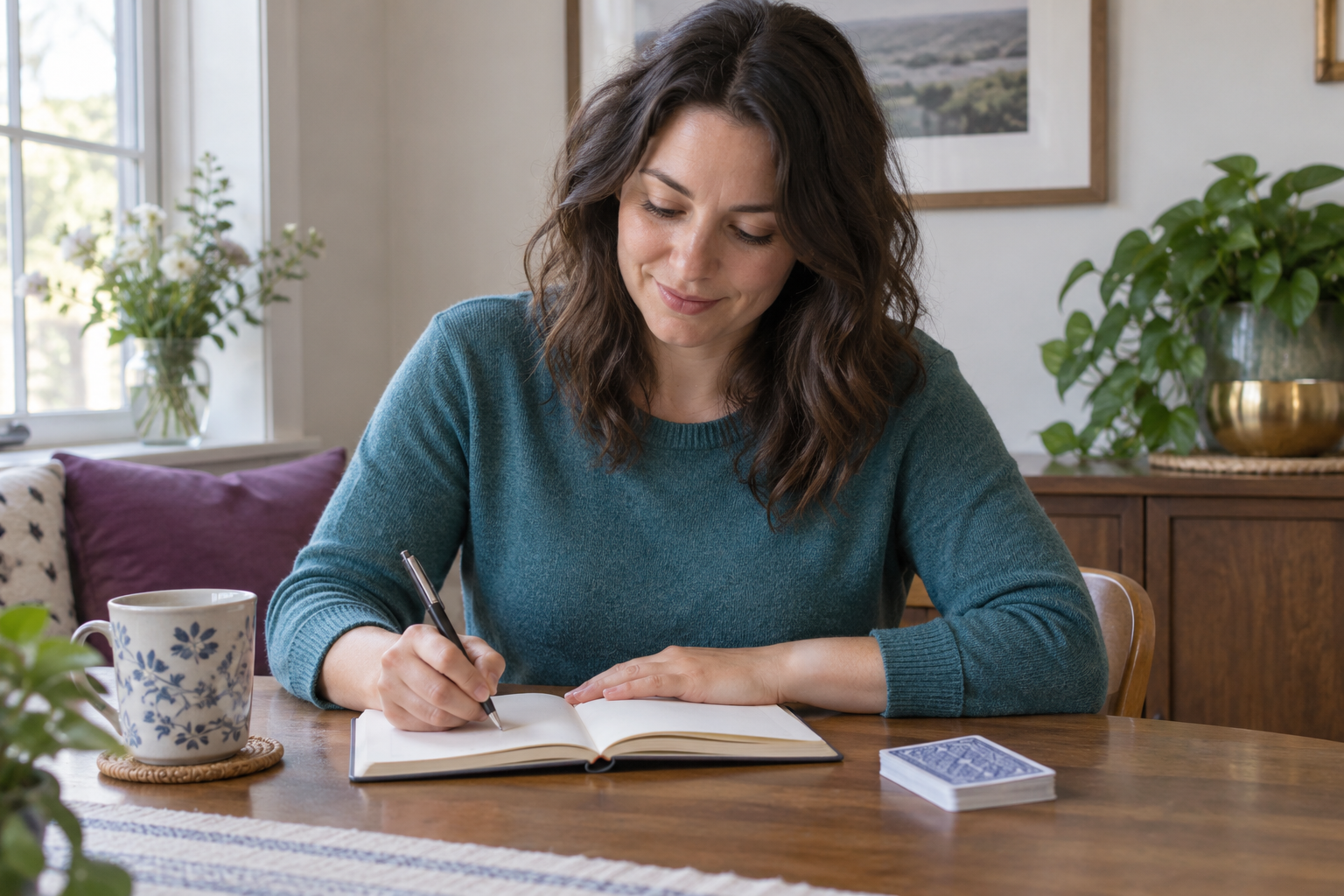
With a willing friend, choose a simple guessing game. Decide whether you are guessing a color, suit or exact card before starting; those are different tasks. Record every attempt and avoid changing the rule after you see the card.
If the card is already selected, guessing its identity is not a prediction of a future event. The earlier article mislabeled this as precognition. A casual result can also be influenced by chance or unintended clues, so it should not be presented as proof of a paranormal ability.
4. A quiet pause: make it optional
If a short pause appeals to you, sit comfortably, keep your eyes open if preferred and breathe naturally. Notice a thought without having to act on it or assign a spiritual source. Finish whenever you want.
Not every practice suits every person. The NCCIH meditation overview discusses potential benefits, limitations and possible negative experiences. Do not push through distress or substitute meditation for appropriate care.
5. A color association: label it as your interpretation
If a person or scene brings a color to mind, you can use it in a private creative exercise. That association does not establish an aura or reveal what another person is feeling.
For actual communication, ask respectfully: “Would you like to talk?” or “Is now a good time?” Do not use a guessed color to judge honesty, make decisions about someone or claim knowledge they have not shared.
What makes the record useful?
- The task is defined before the outcome is known.
- Original notes remain unchanged.
- Misses and unclear results stay visible.
- Ordinary clues and chance are not dismissed.
- The activity remains low-stakes and voluntary.
For a fuller explanation of keeping an assigned comparison fixed, see our practice-record guide. You can enjoy an exercise without making a claim about powers or committing to further training.
Editorial clarification: Guaranteed improvement, the incorrect precognition definition and aura-based judgments about other people have been removed. These activities are not a validated assessment or a method that promises psychic development.
The suggestion to use meditation to enhance psychic abilities makes a lot of sense. Meditation can help clear the mind, which might make it easier to pick up on subtle signals.
The exercise of predicting who is calling before answering the phone could be a simple yet effective way to tap into one’s intuition. Keeping track of success rates over time could provide some intriguing insights.
I find the concept of reading auras compelling. It’s fascinating to think that we might be able to pick up on other people’s emotions and energy through color impressions.
Using a group of friends to practice precognitive abilities with a deck of cards sounds like a fun and engaging activity.
It could also serve as a great bonding experience while developing a unique skill set.
I agree, Salt. It would be interesting to see how often individuals in the group get the card right and whether their perception improves over time.
The techniques mentioned in this article seem quite intriguing. I am particularly interested in the idea of using sports predictions as a means to enhance psychic abilities.